No products in the basket.
We say it all the time:
“Please don’t kiss the baby”
(to those outside the household - because of RSV and other infections)
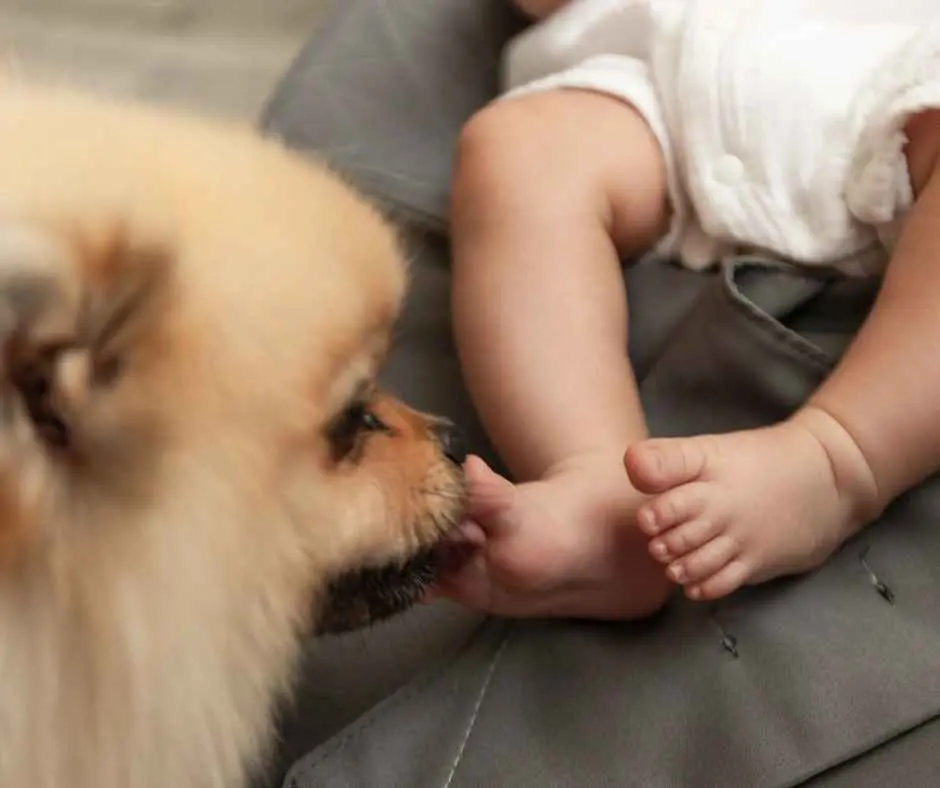
But then…your dog wanders over and gives them a big slobbery lick
And suddenly you’re thinking: “Well… they do live here?”
So what’s the actual answer? Can dogs and cats kiss babies?
Growing up with pets can:
Many babies and dogs become lifelong best friends. It won't be long until they are sharing their food (hopefully baby sharing with dog, not the other way around) - check out our Confident Weaning Course for that fun, messy stage!
But it doesn’t mean “anything goes”
A dog’s mouth carries bacteria.
Not ideal for:
Because your baby’s immune system is still developing
This matters more than germs.
If you allow face licking, your dog may learn: “There are no boundaries when it comes to baby’s space”
And that’s where risk comes in.
Because babies:
Even the gentlest dog can be startled, and that’s how accidents happen.
Not:
* panic
* shout
* punish the dog
But:calmly guide and teach
Face = no
Feet/back of head = okay
If your dog goes for the baby’s face:
Then allow licking on feet or back of head
And praise: “Good kisses! Yes, there!”
This isn’t about stopping interaction - it’s about shaping safe interaction.
A walked, exercised dog = calmer dog for the first meet.
This is one of the simplest wins. You may need to get a family member or dog walker to help.
Bring home a muslin or item of clothing the baby has worn & let your dog or cat sniff it. It reduces novelty when they meet. You may even play YouTube videos of babies crying before hand, increasing the volume over time.
Dogs especially are experts at reading you.
If you’re:
they will be too!
If they sleep in your room or on your bed, don't suddenly change that.
It's all about figuring out how you can all manage safely together.
This helps avoid:
Cats are usually less interested… but still curious.
Same principles apply:
(And yes… they will sit in the Moses basket while it's empty but not when baby is in it - cats don't like things that move suddenly and unpredictably...which is exactly what babies do!)
No matter how gentle your pet is, never leave them alone with your baby. (Cats are swift & nimble - they sometimes sneak in as a door is being closed!)
Not because they’re “bad” but simply because they’re animals and babies are unpredictable.
You don’t need to keep them completely separate!
And you don’t need to let them do whatever they want!
You’re teaching them how to live together!
You’re building a relationship that is:
Because done well…they won’t just tolerate each other - they’ll grow up together 💜
Pets and babies can mix beautifully.
But it’s your job to:
It can happen in a moment: they're showing affection & mean no harm.
It's happened - you can't reverse time, now:
Our Early Parenting Course helps you navigate all aspects of life with a newborn including practicalities, relationship changes, and emotional challenges.
Avoid face licking due to bacteria and behaviour risks, but contact elsewhere is usually fine.
No - but interactions should be supervised and guided.
Keep it calm, let the dog sniff first, and ensure they are relaxed (ideally after exercise).
Yes - exposure to pets can support immune development.
Not germs - but allowing unsafe proximity and unpredictable interactions.